Monday, December 31, 2007
John Bland on learning Chinese
There is nothing in Chinese literature, ancient or modern, likely to compensate any normal individual for the vast amount of labour involved in studying it.


Sunday, December 30, 2007
Keats justifying his preface to Endymion
This is not written with the last atom of purpose to forestall criticism of course, but from the desire I have to conciliate men who are competent to look, and who do look with a zealous eye, to the honour of English literature.
Saturday, December 29, 2007
From the lost papers of Dr.Cornelius Mucus (Vienna), eminent Sinologist, preserved for posterity by the astonishing memory of Murr
 Notes on Chinese history
Chinese history is full of interesting parallels and strange symbolic echoes…
1644, end of the Ming Dynasty. The Emperor, isolated from his people, a virtual prisoner to etiquette and tradition inside the Forbidden City, is prey to the machinations of the hordes of eunuchs who run the country and the court, basically for their own ends. Meanwhile, the war-like Manchus are pouring in over the passes, and the warlords from the provinces encroach on the city…
1911, end of the Ching Dynasty. The Dowager Empress and her crew, virtual prisoners to etiquette and tradition inside the Forbidden City, are prey to the machinations of the hordes of eunuchs who run the country and the court, basically for their own ends. Meanwhile, the European and Japanese Imperial powers make more and more outrageous demands for concessions, and the Young Chinese are agitating for revolution…
1975, end of Mao’s rule. The Chairman, isolated from his people inside the Forbidden City, a virtual prisoner to the climate of fear created by his own purges, is prey to the machinations of his bodyguards, medical teams and the two uber bitches: Jiang Ching and Zhang Yu Feng. Meanwhile, party dignitaries jostle for the succession, and the securing of Mao’s legacy…
1912 one George Morrison, an Australian chancer who cannot speak or read
Chinese, is the political advisor to the new ruler of the country, President Yuan Shi Kai, who cannot speak or read English…
1933 one William Donald, an Australian chancer who cannot speak or read
Chinese, is the political advisor to the new ruler of the country, President Chiang Kai Shek, who cannot speak or read English…
Monday, December 17, 2007
Lu Xun on the aftermath of the First World War
Three hundred years of evolutionary progress have all come down to nothing but four words: selfishness, slaughter, shamelessness and corruption.
Saturday, December 08, 2007
Inadvertent Obscenity #6
The face of this fair creature had a pure oval, and her clear, brown eye a quiet warmth ...the young man stood facing her, slowly scratching his thigh, and shifting from one foot to the other. He had honest, stupid, blue eyes, and a simple smile that showed his handsome teeth. He was very well dressed. ‘I suppose it’s pretty big,’ said the beautiful young girl. ‘Yes, it’s pretty big,’ said the handsome young man. ‘It’s nicer when they are big,’ said his interlocutress, and for some time no further remark was made.
Henry James Portraits of Places
Henry James Portraits of Places
Tuesday, December 04, 2007
The Emperor Ching Kangxi on the personal cost of leadership
I am querulous and forgetful, and terrified of muddling right with wrong, and leaving my work in chaos. I exhaust my mind for the country's sake, and fragment my spirit for the world.
Monday, December 03, 2007
Fragment 12307
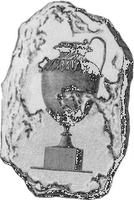
On my current reading...
I know I should focus on China, but Keats - oh immortal Keats! - always beckons.
Perhaps it's just age, or maudlin sentimentality, but tell me, is it totally naff to weep for Keats?
Joseph Conrad on the inadequacy of language
Life knows us not and we do not know life - we don't even know our own thoughts. Half the words we use have no meaning whatever and of the other half each man understands each word after the fashion of his own folly and conceit. Faith is a myth, and beliefs shift like mists on the shore; thoughts vanish; words, once pronounced, die; and the memory of yesterday is as shadowy as the hope of tomorrow.
Sunday, December 02, 2007
"The Force that through the green fuse drives the flower" Dylan Thomas

In many ways, Dylan Thomas is the inheritor of John Keats. Via Hopkins. Dylan Thomas has Keats’s same auditory richness, the same passion and hallucinatory linguistic response to the experience of life. His poetic sensibility, like Keats’s, is based on the traditional forms of English poetry, and deeply rooted in the rhythmic power of Shakespearian iambic.
The force that through the green fuse drives the flower
Drives my green age; that blasts the roots of trees
Is my destroyer.
And I am dumb to tell the crooked rose
My youth is bent by the same wintry fever.
The force that drives the water through the rocks
Drives my red blood; that dries the mouthing streams
Turns mine to wax.
And I am dumb to mouth unto my veins
How at the mountain spring the same mouth sucks.
The hand that whirls the water in the pool
Stirs the quicksand; that ropes the blowing wind
Hauls my shroud sail.
And I am dumb to tell the hanging man
How of my clay is made the hangman's lime.
The lips of time leech to the fountain head;
Love drips and gathers, but the fallen blood
Shall calm her sores.
And I am dumb to tell a weather's wind
How time has ticked a heaven round the stars.
And I am dumb to tell the lover's tomb
How at my sheet goes the same crooked worm.
I have been learning this poem and contemplating its deep, fabulous beauty. What does this wonderful poem mean? It is almost abstract in its distortions of image and causality. Once one gets past the dazzling power of the language, its driving rhythm, what does it mean? Does it mean anything? Perhaps it’s just a kind of auditory intoxication, brought about by the increased oxygen in one’s blood as a result of drawing enough breath to read the poem aloud.
The poem works in a series of lexical fields, all of which suggest some Great Idea. These Platonic Forms, as it were, in themselves are always absent from the poem; they are only ghostly presences that pervade the poem, but which are never clearly articulated, so that one is never sure whether they are really there, what they might be, and whether one has understood them correctly; hovering mirages of ideas.
These lexical fields, composed of simple words describing simple natural things, create a metaphysical landscape in the mind.
Here are the word groups:
1. force, drives, youth, red, blood, water, green, age, sucks, hauls, whirls, stirs
2. rocks, water, blowing, wind, flower, rose, worm, winter, veins, drips, gathers, heaven, stars, time
3. rope, sail, fountainhead, sheet, wax, ticked,
4. shroud, hanging man, clay, lime, blasts, destroyer, tomb, sheet, hangman, crooked
There is considerable overlap, with many words appearing in one or more group, like this:
1. force, drives, youth, blowing, wind, red, blood, water, green, age, sucks, hauls, whirls, stirs
2. rocks, water, blowing, wind, flower, rose, blowing wind, winter, veins, drips, gathers, heaven, stars, time, destroyer
3. rope, sail, fountainhead, sheet, wax, ticked, tomb
4. shroud, hanging man, clay, lime, blasts, destroyer, tomb, sheet, hangman, crooked, blowing, wind
The first word group is associated with images of energy, perhaps the energy of youth, of different forms and directions of energy, the colours of energy. To my mind they suggest the power of the natural life force which all living things share, the Great Idea of Power, Life Force.
The second group is associated with images which suggest the Great Idea of Nature, nature as distinct from the products and culture of Humanity’s Industry, which forms the Great Idea of the third group. Thus we have two Great Ideas embodying one contrast: Nature versus Humanity’s Industry.
The words in the fourth group are associated with images of death and decay, suggesting another Great Idea, set up in contrast to the Life Force of the first group - Death.
So we have four Great Ideas set up in contrast to each other, overlapping pairs of spectra: Death - Life Force; Nature - Industry.
What does the movement of these four Great Ideas and their shifting relationship to each other suggest to me?
(Paraphrasing the meaning of a poem, as opposed to the technical description of how the verbal contraption works, is always the part where the discourse of the literary analysis of poetry steps dangerously over an invisible border into the land of kitsch. As Steve Martin says about music, explaining music in language is about as useful as dancing architecture.)
Paraphrase part 1
There is an immanent unity and an opposition between nature and humanity’s industry, a unity born of the fact that they both possess the same opposing forces of life and death. All things pass. All things develop, change and die; youth becomes age, blood becomes wax, and although time can be captured in a clock, it nonetheless always ticks away. We, and our industry and culture, with our human body and nature, share with nature our impermanence.
This reading is highly personal, I must stress. There is nothing in the poem's logic of expression, its succession of images and indeed even in its syntax, which points clearly to this meaning.
Any notion of diachronic casuality, for example, one of the main signs of a constructed meaning on which a poem -or any work of language- is based, is problematized in the poem. The images and words in each of the four fields do not necessarily appear in any causational relationship to each other in the poem, but rather echo or prefigure each other in a synchronic relationship. Rope comes before sail, hanging man comes before hangman, shroud suggests (winding) sheet. It is this shifting relationship of words that both evokes and hides the spectral presence of the four Great Ideas, and their slowly revolving pattern.
And I am dumb to tell, is the one image and constant word group that occurs in every verse of the poem, sounding like a mantra through the mist. And this, I take to be the central meaning of the poem:
Paraphrase part 2
It is impossible to convey a great idea, a deep truth, in language that does not restrict this truth.
Any philosophic, scientific, technical or expository description of a truth must necessarily and involuntarily restrict that truth through the pattern imposed by the syntax, vocabulary and breath of that language, not to speak of situating that truth in a tradition of other attempts to describe it, the canon. It is therefore impossible to convey through paraphrase the meaning of the poem as I have attempted above. We do not have the power to express these truths without the contamination of language, and all that it brings. (Language is a virus William Burroughs)And I am dumb to tell. The only way for language to express such an Idea, such a truth, is through poetry like this: abstract, incantatory, centred on the breath and the physical body, the energy of song itself.
The miracle of the poem is that it does, at least for this reader, tell. It is Dylan Thomas, perhaps more than any other 20th century poet in English, who most fulfils Keats's theory of negative capability: ...capable of being in uncertainties, mysteries, doubts, without any irritable reaching after fact and reason. This can be clearly seen in The force that through the green fuse drives the flower but is by no means restricted to this poem alone. It is Dylan Thomas's characteristic stance when his writing is being most truthful to its nature. (This leaves out Under Milkwood, which while his most popular work, and one of my favourites, usually steers away from the metaphysical intensity of his best poetry.)
Dylan Thomas was yet a greater poet, a more mighty magus of language than even he was aware.
Correspondence #5
In these times of ours, though concerning the exact year there is no need to be precise, a boat of dirty and disreputable appearance, with two figures in it, floated on the Thames, between Southwark bridge which is of iron, and London Bridge which is of stone, as an autumn evening was closing in.
Charles Dickens
Our Mutual Friend
The Nellie, a cruising yawl, swung to her anchor without a flutter of the sails, and was at rest. The flood had made, the wind was nearly calm, and being bound down the river, the only thing for it was to come to and wait for the turn of the tide.
The sea-reach of the Thames stretched before us like the beginning of an interminable waterway. In the offing the sea and the sky were welded together without a joint, and in the luminous space the tanned sails of the barges drifting up with the tide seemed to stand still in red clusters of canvas sharply peaked, with gleams of varnished sprits. A haze rested on the low shores that ran out to sea in vanishing flatness. The air was dark above Gravesend, and farther back still seemed condensed into a mournful gloom, brooding motionless over the biggest, and the greatest, town on earth.
Joseph Conrad
Heart of Darkness
The river sweats
Oil and tar
The barges drift
With the turning tide
Red sails
Wide
To leeward, swing on the heavy spar.
The barges wash
Drifting logs
Down Greenwich reach
Past the Isle of Dogs.
Weialala leia
Wallala leialala
T.S.Eliot
The Wasteland
Charles Dickens
Our Mutual Friend
The Nellie, a cruising yawl, swung to her anchor without a flutter of the sails, and was at rest. The flood had made, the wind was nearly calm, and being bound down the river, the only thing for it was to come to and wait for the turn of the tide.
The sea-reach of the Thames stretched before us like the beginning of an interminable waterway. In the offing the sea and the sky were welded together without a joint, and in the luminous space the tanned sails of the barges drifting up with the tide seemed to stand still in red clusters of canvas sharply peaked, with gleams of varnished sprits. A haze rested on the low shores that ran out to sea in vanishing flatness. The air was dark above Gravesend, and farther back still seemed condensed into a mournful gloom, brooding motionless over the biggest, and the greatest, town on earth.
Joseph Conrad
Heart of Darkness
The river sweats
Oil and tar
The barges drift
With the turning tide
Red sails
Wide
To leeward, swing on the heavy spar.
The barges wash
Drifting logs
Down Greenwich reach
Past the Isle of Dogs.
Weialala leia
Wallala leialala
T.S.Eliot
The Wasteland
Subscribe to:
Posts (Atom)