Friday, August 18, 2006

"Messiah" Gore Vidal

http://photos1.blogger.com/blogger/5088/3565/320/mecut.6.jpg
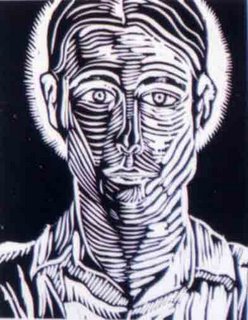
This book has been wrongly positioned by the publisher as a hilarious romp, a work in the line of Vidal’s other romps such as Kalki, Duluth and Myra Breckenridge. However, the bleak cover picture indicates much more accurately the subject, tone and project of the work.
The protagonist is an old man fighting against loss of memory brought about by physical decay and in the process of writing his memoirs. This is a familiar trope for Gore Vidal. Julian (written when the author was 37), Creation (written when the author was 56), Kalki, (written when the author was 53) all feature an old man in a dry month. This stance, surprising in a comparatively young author, allows Vidal to exercise his judgment over his own time with some of the authority of a longer historical perspective, illuminating the follies of his and our age by placing them into a distant past. At the same time it is also perhaps a disguise adopted by an outsider: the marginal position in society of extreme old age masking and mirroring the sexual outsider, the man of above average intelligence, and the holder of unconventional values. (Come to think of it, sexual marginalisation disguised as old age is not an uncommon trope in other ‘gay’ writers too. Consider this opening sentence from Anthony Burgess’s marvelous Earthly Powers, the fictional autobiography of an octogenarian homosexual light-musical composer and popular novelist: It was the afternoon of my 80th birthday and I was in bed with my catamite when Ali announced that the archbishop had come to see me. And then of course there’s Proust, and Yourcenar’s Hadrian.)

This long perspective of history is especially brilliantly done in the opening chapter of the novel, where the technique of defamaliarisation is applied to history itself, and one is not sure whether Vidal is describing an alternative, a kind of what-if scenario, a science fiction scenario light years away into the future, or our own desperate age stripped of all the bullshit. This is not Monty Python at all, but a shamefaced and regretful Tiresias. The voice is very serious, Jamesian in its syntax and disarmingly candid.

I have never found it easy to tell the truth, a temperamental infirmity due not so much to any wish or compulsion to distort reality that I might be reckoned virtuous but, rather, to a conception of the inconsequence of human activity which is ever in conflict with a profound love of those essential powers that result in human action, a paradox certainly, a duel vision which restrains me from easy judgment.

The act of memorization is somewhat crucial. The world has been conquered by a death cult called Cavesword, named after its founder, John Cave (note the initials). The main premise of the cult is that life, consciousness, is an aberration, and that death is the natural state in which we are perfectly at one with the unknowing and uncaring universe. A potion/poison can be administered to adherents called Cavesway, which fills the suicidalist’s dying brain with lively visions and eases the final journey. Governments have succumbed to the cult, and all branches of Christianity have been totally eradicated (if only...). All dissenters are brainwashed and society exists in a kind of ghastly uniformity. Our protagonist, Eugene Luther, it transpires, played a crucial role in the formation of this religion, providing its basic texts and doctrines through his knowledge of philosophy and classical history. When he is recruited to the cause, he has just finished work on the emperor Julian, the last apostate. Writing his memoirs is the final doomed assertion of the truth, which no one will read, except, of course, the reader of the novel.
It is perhaps in this novel more than any of his others that Vidal’s voice aligns itself most closely to his protagonist’s. Certainly there are the usual Vidalian flashes of mordant wit and the occasional outrage. One of the characters responds thus to the increased number of suicides globally as the new religion takes hold: There are too many people as it is, and most of them aren’t worth the room they take up. Overpopulation is another Vidalian trope, one which is always couched throughout Vidal’s career in such a way that the reader is never sure how much irony is to be inferred. Luther ultimately loses out in a power struggle between the publicist Paul Himmel, who plays Paul of Tarsus to John Caves’s Jesus. Luther's final defeat results in his name being totally expunged from all the official records, and he has become a non-person, hiding out in the Valley of the Kings on the Nile, another gay, death-obsessed location (Echoes of Paul Bowles and Andre Gides’ The Immoralist).

So much for the plot. Much of the intellectual debate is couched in the form of Platonic dialogues between two characters, a form which Luther uses to expound Cave’s nihilistic views in the works he ghost-writes for him.

“There’ll be a time when all people are alike.”
“Which is precisely the ideal society. No mysteries, no romantics, no discussions, no persecution because there’s no one to persecute. When all have received the same conditioning, it will be like…”
“Insects.”
“Who have existed longer than ourselves and will outlast our race by many millennia.”
“Is existence everything?
“There’s nothing else.”


The essential conflict revolves around Luther’s realization that if Cavesword is right, then life must be celebrated, and the others’ insistence that death must be sought. We have art on the side of life, and publicity, media manipulation and marketing techniques on the side of death, resulting ultimately in the death of Western Civilization, as all history prior to the life of Cave is erased and forgotten, and Western culture succumbs to the banality of the media.
The book of course operates as a spoof on all religions, including the myth of Isis and Osiris, as Iris Mortimer reenacts an annual nation-wide pilgrimage gathering Cave’s ashes, which have been scattered over three different states. Psychoanalysis and the new age religions also come under scorching satirical fire. However, it is Christianity that comes in the for the worst savaging. The portrayal of a religion’s struggle for advancement in its early days has resonance that extends all the way back to Paul of Tarsus’s Epistles to the Romans and Corinthians, the great schisms in the first thousand years after Christ, the apostasy of Julian, and the final triumph of the ‘new’ religion in the person of Constantine.

The novel echoes many of the great dystopian novels of the century, Orwell’s 1984 –the world has been divided into three Religious Zones- and Brave New World; many aspects of real history: Stalin’s purges, the establishment of the temporal power of the Papacy; and echoes of many real cults: Scientology, Jim Jones, Anthroposophy and so on.
At the heart of the novel, around whom all the action and doctrine revolves, is the character of John Cave himself, who, in spite of charismatic and hypnotic eyes, is weirdly mediocre. He does not relate to people, has no real ambitions, is distinctly colorless and longs only to be traveling, choosing places to visit from a travel catalogue on the basis of their euphonious names alone: Tallahassee and Syracuse. His ideas and the religion he founds, with its empty, vacuous ritual and disappointingly banal terminology represent the power of mediocrity transcendent over all, by means of the power wielded by unscrupulous media manipulators. In this novel, defenders of the truth, of life and of the values associated with our long tradition have been pushed to the edge, and threaten, through their own decline, to vanish from the scene altogether.
Like all Vidal novels, this one includes an –ix word: in this case ‘victrix’. I think it must be a private joke with Vidal to include this strange and lovely suffix in every novel: Creation, and Empire have ‘executrix’ and Kalki has ‘aviatrix’. As I read through the Vidal canon, it’s a game I play with myself, to spot the ix.

Penguin Classics edition

Wednesday, August 16, 2006

Thucydides, dealing diplomatically with stupidity

I congratulate you on your simplicty, but do not envy you your folly.
Fragment 9


I think of Oscar Wilde in America down a mine dressed in velvet and lace lecturing the miners on the Ethics of Art and reading to them from Benvenuto Cellini. This image has many meanings: a) a total commitment to art and aesthetics in the face of working class culture, a refusal to compromise to one’s audience, to sell-out to the masses; b) evidence of the openness of 19C American culture, where anything was possible; c) a fabulous example of a queen’s assertion of his right to be a queen in an overwhelmingly masculine and heterosexual environment, and thus an example of courage; d) an aspect of performance, both in Oscar’s initial lecture to the miners, and his retelling of the story to his London audience.

Monday, August 14, 2006

"The Impressions of Theophrastus Such" George Eliot


Written two years before her death, this is Eliot’s summing up, her distillation of her atheistically yet humanly ethical philosophy, her ultimate meditations on the nature of life and writing, her analysis of character without the need to create plot to help the reader along. Couched as a series of reflections on the nature of his friends by the narrator called Theophrastus, the book thus situates itself into the genre of character writing, invented by the eponymous Greek philosopher. However, the book signals its intention to be taken as a meditation on human character generally by the strangeness of the character’s names, which ostensibly hide the identities of the originals and at the same time awake echoes of Medieval morality literature and Latin literature: Ganymede for the writer who was famous when young, Sir Gavial Mantrap for the immoral swindler, Mixtus, Scintilla, Lentullus etc. About half way through the book, in the essay called ‘Debasing the Moral Currency’ it seems as if Eliot herself hijacks the narrative voice, and Theophrastus is lost. It’s not so much a stridency of tone, but rather an intensifying of the intellectual argument without the illustration of character: Eliot decides to make no concessions to her readers, and discontinues her attempts to illustrate her arguments by fictional character studies. The book thus swerves from fictional literature to expository literature. The text bristles with erudition in a host of European languages, both living and dead, and there are constant references to contemporary cutting edge scientific and geographical knowledge. This shift in the narrative voice effectively shifts the book into a new genre, that of the humanistic essayist: in her attempts to understand and get to the bottom of her individual relationship with the reality of life and the perception of it by consciousness, Eliot joins Montaigne, Marcus Aurelius and Bacon in a tradition that ultimately descended from Socrates's dictum: the unexamined life is not worth living.

Consciousness does not come off too well: it is a futile cargo […] screeching irrelevantly, like fowl tied head downmost to the saddle of a swift horseman, or an idle parasite on the grand scheme of things. This increased cynicism of tone towards the end of the book, is balanced by a perceptive, candid and humble analysis of Theophrastus’s meditations in the opening chapter, which warn against the coming cynicism: I began […]to watch with peculiar alarm lest what I called my philosophic estimate of the human lot in general, should be a mere prose lyric expressing my own pain and consequent bad temper.

Structurally, each essay develops an idea or theme first brought up in the opening chapter, and there is lots of reiteration of ideas, a circular, meandering structure which is organic rather than linear. This exemplifies Eliot’s belief in the interconnectedness of humanity with each other and with the world, an idea that she develops to its aesthetic conclusion in Middlemarch. The first and last essays function as book ends: the first essay prefigures many of the themes developed later in other essays, while the last essay deals with the strange theme of similarity, or diversity within general sameness. There is a constant and subtle shifting of emphasis in this essay. Is the opening section on the nature of similarity and diversity a lesson drawn from Eliot’s/Theophrastus’s reflection on the nature of the Jews; or is the description of the nature of the Jews an exemplification, like the character drawings of the other essays, of the theme of similarity and diversity? What is the correct balance of emphasis here? One is never quite sure. Eliot has an obsession with Jews as we know from Deronda, but how ironic that this extended meditation on the history and nature of the Jews sits in the same space as Eliot’s/Theophrastus's repulsive high Victorian views on nationalism, that could almost come from Mein Kampf: …not only the nobleness of the nation depends on the presence of this national consciousness, but also the nobleness of each individual citizen. And yet also in this essay we have the distillation of Eliot’s humanism, in her categorization of vice, evil and naughtiness. She delineates what she considers to be vices, and in place of the conventional high Victorian morality which one would expect (greed, sloth, avarice etc) one has this:

Eliot’s (Such’s) vices:
A spirit of bitter isolation
Scorn for wolfish hypocrisy
Triumph at prospering at other’s expense
Lying conformity
A pretence of conversion
Outward renunciation of hereditary ties
Lack of real love towards society
Unscrupulous grinders of people

The implication here, of course, is that turning away from vices such as these, as Theophrastus attempts to do in his first essay, is Eliot’s program for life, her view of the virtuous man.

The sentences meander and subdivide and split further hairs, and enact marvelously the process of thought itself. Late James was no originator of this type of sentence. Eliot commands your concentration, and once given, it is richly rewarded with the occasional brilliant epigram:

It is in the nature of foolish reasoning to seem good to the foolish reasoner.
Is it really to the advantage of an opinion that I should be known to be the holder of it?
Blessed is the man, who having nothing to say, refrains from giving us wordy evidence of the fact.

The matter (to use an Eliotic word) of most of the chapters shows a preoccupation with change, the change wrought on character by the exigencies and disappointments of life. She cites many examples of people who have become unaware of these changes in their characters and who keep behaving as they did when they were young. Other themes are the hypocrisy of society (from which Eliot suffered enormously in her personal life) and the worth wrongfully attributed and rewarded to mediocrity. She is relentlessly and fearlessly highbrow and serious (see how she barges in on the fictional Theophrastus of whom we have become fond, elbowing him out of the discourse) decrying, for example, with her usual astonishing prescience, the habit of the English of pouring irony over everything and turning everything into a joke. What must she have thought of the current English obsession with comedy, in which it has become acceptable to seriously debate whether cancer is a suitable subject for stand up!? And the concurrent anti-intellectualism that pervades education, writing and journalism, indeed every aspect of English cultural life? How she would have despised and despaired of our time.

And the overarching metaphor through the book is writing itself. Many of the cautionary characters are writers, low-brow, high brow, lowly, over praised or over extended.

When we come to examine in detail what is the sane mind in the sane body, the final test of completeness seems to be a security of distinction between what we have professed and what we have done; what we have aimed at and what we have achieved; what we have invented and what we have witnessed, or had evidenced to us; what we think and feel in the present and what we thought and felt in the past.

On reading this book, one feels a sense of hopelessness at ever being able to be such a perfect human being as the writer of stuff like this, and at the same time, also filled with a sense of how worthwhile a project for life the attempt at least would be.

Sunday, August 13, 2006

Fragment 134

To what extent are our responses to a book –the meanings we read out of it, the taste it leaves in our mouths, the impression it makes on us, our love or indifference to it-, to what extent is all this determined –even if only subliminally- by the size and style of the type used, the quality of the paper under our fingers, its smell, the proportions of its shape, its weight in the hand, the stiffness of its cover, the book as object? Madame Bovary is clearer funnier wittier and more sarcastically intelligent when I divorce the text from the medium on which I have read it.

Correspondence #1

When I heard the learned astronomer
When the proofs, the figures were ranged in columns before me,
When I was shown the charts and diagrams, to add, divide, and measure them,
When I sitting heard the astronomer where he lectured with much applause in the lecture- room,
How soon unaccountable I became tired and sick,
Till rising and gliding out I wandered off by myself,
In the mystical moist night-air, and from time to time
Looked up in perfect silence at the stars.

Walt Whitman 1865

…knowledge as non-conceptual objects

Adorno

Fragment 122

Genre analysis. Perhaps this is the criterion of greatness in literature: works which transcend their genre are those which are truly great. Most of the great novels seem to use their genre as some sort of sounding board and then spin out from there in ever widening circles; or they take several genres and conflate them. Two alternatives. Either this means that genre studies are an inadequate way of looking at the problem: the perfectly delineated work within the boundaries of one clean genre perhaps does not exist except as a theoretical model (I suspect this may be so); or it has vanished from the canon, sunk into obscurity by the purity of its own bloodline. The novel is an inherently omnivorous genre, devouring all other genres to create a mix, a vacuum which sucks everything in of necessity according to the logic of its own rules.

Fragment 141

Mary Shelley’s Frankenstein. Joyless reading. What interests me in a novel is always the discourse. The story keeps me going, but the discourse keeps me there. Around the start of the 19th century –Jane Austen, let us say- a shift occurs in the nature of novel writing, in the balance between story and discourse. The discourse becomes more interesting and something to be enjoyed in its own right, the story almost becomes a vehicle for the discourse. The shift is from narrative to language. In 18th century novels the discourse is the mode of conveyance for the story, seldom anything more. Shelley is a conservative writer and writes in the 18th century mold. Jane Austen was a radical modern in this context, writing forwards. In Frankenstein I find myself turning the pages to get to the next stage in the plot, the next jerk forward in the action. The discourse is full of cliché, nothing is visualized, nothing felt. Of course it is a parable, and it is in the nature of parables that they be boring.

Milton on Depression:

Which way I fly is Hell; myself am Hell;
And, in the lowest deep, a lower deep
Still threatening to devour me opens wide,
To which the Hell I suffer seems a Heaven
Paradise Lost IV

Fragment 161


Saul Bellow. How well he understands the impoverishment of the spirit when you live in a culture where nothing has value, only a price; and how valiantly and with what integrity and humor he fights against it. How well it chimes with my present circumstances. Always experimental and knowing, and accepting of himself and curious for others, Charlie Citrine, that wonderul creation. What fascinates me most about reading Humboldt’s Gift for the first time is seeing how Charlie’s growing discovery of anthroposophy is going to unfold, and what he will eventually make of it. How will it help the character to resolve his extreme loftiness and disengagement, which is Citrine’s imperative as a character, his fate? And what ultimately is Saul Bellow’s stance towards it. I love how he swoops from talk of the consciousness soul and the etheric body (the obsolete mad discourse of one of my previous lives) with descriptions of Chicago mobsters and other intellectual pursuits. Steeped through and through with a passionate love of culture and art and above all, literature. His study of boredom has got to be the most interesting unwritten book ever.

"The Castle of Otranto" Horace Walpole


Gothic novel. Comparisons with 19th century novels: the prose has a breathless, breathy precipitate feel to it, helped largely by the almost non-existence of paragraphs. Punctuation is different: semi colons have a different function, used to divide the narrative voice from speakers. There are no quotations for speech and no paragraphing here either: speakers merge in and out of each other and in and out of the narrative voice in an endlessly long paragraph, which sometimes extends for a whole chapter. The text is amazingly fractured, with remarks left hanging in mid air, interruptions, inconsistencies and infelicitous innuendoes. The plotting is extremely slapdash, with crucial details added as and when they are needed, with absolutely no self-consciousness about the artificiality of this technique: the whole theory of narrative is different. Instead of Barthes’s “seeds planted that will later grow into fruition”, the plot lurches unsteadily from one crisis to another, with details supplied in order to extricate characters from impossible situations. Most of the dialogue and plotting serves the purpose of prevarication, with repetition of pre-explanatory banality for suspense, redundant cliffhangers and bizarre coincidences and occurrences. And yet it is not without a certain hair-raising delight, caused largely, for me, by the strangeness of the incidents: the black helmet’s plumes waving outside the window, the caverns under the castle. This is really what Mervyn Peake was trying to recreate. 19th century novels took from this the vulnerable yet strong position of the female, histrionic reactions to bad news and family values where the male is supreme. Themes include the struggle between Church and Sate, Christianity is juxtaposed with pagan magic. However, the world of the novel is so completely artificial that it really bears no resemblance to the real world, so that it becomes absurd to speak of the theme of Church versus State, say. The whole text bears all the marks of appearing to have been written in a terrible rush by an amateur. But this may be a very subtle irony.

"Against Nature" J.K. Huysmans


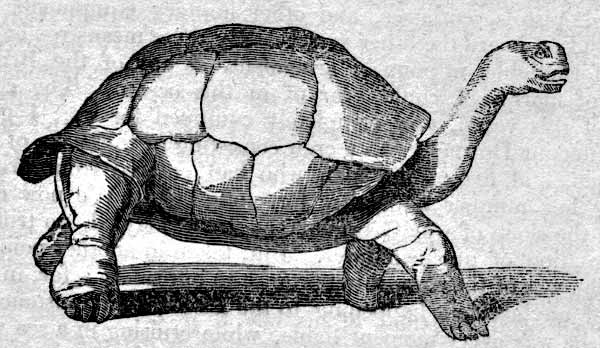
This is the book that launched the Symbolist movement, Art Nouveau, the Decadents, and eventually, I suppose, Modernism. It’s hard now, post Aubrey Beardsley, post Mucha, post Wilde to see the originality of the book, but original it truly is, setting out most of the subsequent themes of the fin du siecle: extreme aestheticism, fears of degeneracy and weakness of blood (syphilis and Des Essientes watery aristocratic blood). Reading Huysmans is to have Wilde ruined for one –at least the Wilde of the dreadful Salome, and the appalling verse, which is worse. Reading Huysmans is to have the origin of Wilde of The Artist as Critic explained to one. Des Essientes is a weedy aristocratic aesthete with an unlimited budget who retires from the world in order to build his environment of artifice. He renounces nature and all that it includes –fellowship, the day- and immerses himself in reverie, his library, his art collection and a principled elevation of artifice over nature. The overriding symbol for this is his gilding and encrusting with precious stones of his pet tortoise, who subsequently dies unable to bear the dazzling luxury imposed upon it.

Although Des Essientes has experienced heterosexual love, the book is a series of carefully coded inversions, perhaps masking the central sexual inversion of the protagonist. He wants to decorate his bedroom like a monastic cell, but can’t really bear the thought of the rough poverty this would entail, so he chooses fabrics and materials which, while rich and luxurious in themselves, will create the impression of poverty when viewed under candlelight. Tired of the artificial flowers he has in his house, he longs for real flowers, but chooses ones which look artificial; day is inverted into night, his decorations are carefully considered under the effect of candlelight. His one relationship is with a young man toward whom he acts as mentor, not for the good, but in order to corrupt him utterly through sex so that he will become a murderer. This he describes as an act of revenge against those who are unable to appreciate beauty. Like the poor tortoise’s shell, the text is studded with references to art and the fruit of civilization: Redon, Moreau, a fabulous description of the decline of Latin as a language, put forward as a catalogue of Des Essientes’s library.

It is the ultimate highbrow’s book, and is the highbrow’s revenge. Each of the arts, each of the senses is given a chapter and analyzed to its absurd depth: taste in the description of the liqueur mouth organ, color in the description if his interior decoration, literature, both classical and modern, horticulture, painting, food. Wilde’s famous dictum that nature imitates art, and that we appreciate nature because art teaches us how to see it, is a lesson culled from Huysmans' brilliant use of metaphor, which reaches its apotheosis in the description of the tropical plants. They are all described in terms of wounds or vile diseases and excrescences: a mad blurring of symbol and object, a blending of discourses worthy of the great Joyce himself: the Echinopsis , thrusting its ghastly pink blossoms out of cotton wool compresses, like the stumps of amputated limbs, Nidularium, opening its sword shaped petals to reveal gaping flesh wounds… and goes on, in a sustained confluence of visions. This description has surely altered our view of tropical flowers, the way that Mapplethorpe’s pictures have.

Interestingly, Des Essientes’s perverted rejection of nature and elevation of artifice is seen as being connected to Catholicism –his Jesuit education- on the one hand, and an extreme (Neo) Platonic classicism (The Plato of The Laws Book X would be smoking with speechless rage to see how his doctrine of the ideal had been usurped by this aesthetic vision: His penchant for artificiality and his love of eccentricity could surely be explained as the results of sophistical studies, super terrestrial subtleties, semi-theological speculations, fundamentally they were ardent aspirations towards an ideal, towards an unknown universe towards a distant beatitude as utterly desirable as that promised by the scriptures. No Protestant or non-conformist could have had the imagination to create this madness: fin de siecle and Decadence is a Catholic vision (Perhaps this explains Wilde’s death bed conversion: a last commitment to his youthful ideals.) On the other hand it can also be attributed to the extreme boredom of someone who doesn’t have to work for a living.